
New to special needs planning? You’re in the right place. A special needs trust is simply a legal tool that lets your family set aside money for your loved one without putting their government benefits at risk. That’s it — that’s the core idea.
If you’re just starting to figure this out, I’d suggest reading our Parent Journeys guide first — it walks through the whole picture based on where you are right now. Then come back here for the Florida-specific details.
Already know the basics? Keep scrolling — everything below is specific to Florida.
Already know you need an attorney? Our guide to finding a special needs trust attorney has trusted directories, questions to ask, and what to expect.
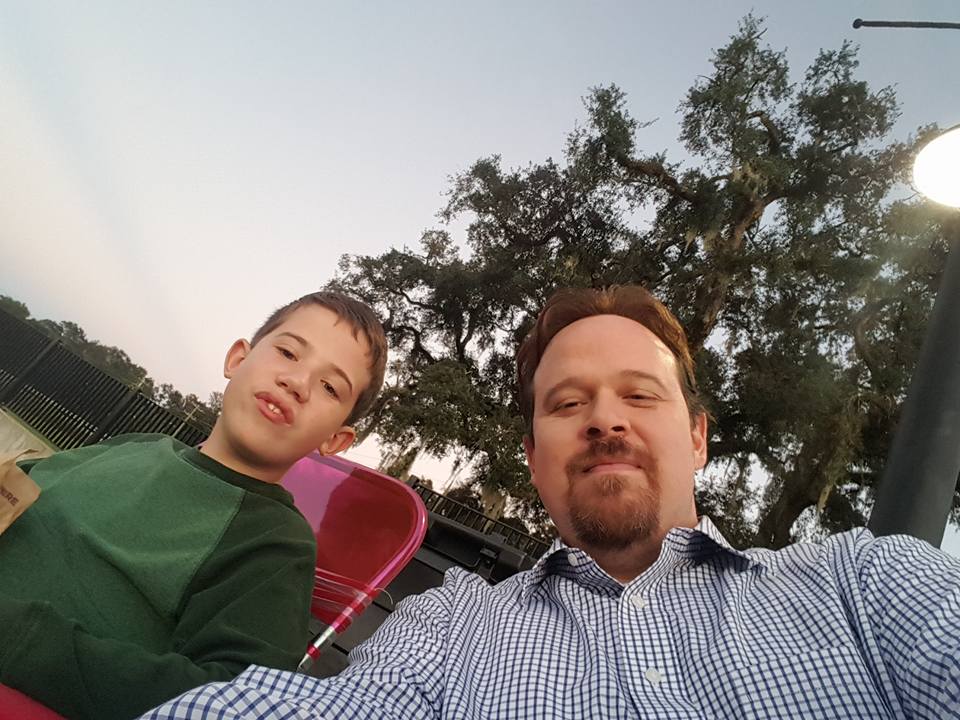
You’re not alone in this. As a parent who’s navigated these waters for over 18 years with my autistic son, I know the fear that keeps you up at night — the worry that one wrong move could cost your child their benefits, their care, their future. Take a breath. You’ve found the right place, and Florida has real options to protect your family.
Here’s everything you need to know about special needs trusts in Florida — no legal jargon, just clear answers from a parent who’s been there.
— Randy Smith, special needs parent. Last reviewed July 2026. About the author →
Recent Florida Updates
Last reviewed: July 2026
- July 2026: The state’s $6 million Innovative Service Development (ISD) transportation grant program was line-item vetoed on June 29 — door-to-door rides for disabled adults ended statewide July 1, despite state records showing the program oversubscribed 2-to-1. Our full report · what families can do · every disability program cut.
- 2026: ABLE Age Adjustment Act raises disability onset age from 26 to 46, expanding eligibility significantly.
- 2025: HB 1103 (became law June 2025, Ch. 2025-130) expands Florida’s statewide IDD managed-care pilot. Families on the waitlist could begin opting in October 2025, and by July 1, 2026 all waiver recipients become eligible to enroll — but enrollment is voluntary, and the law bars the state from moving anyone into managed care automatically. Talk to APD before making any change to your family’s services.
- 2025: ABLE United updated investment options and streamlined enrollment.
- 2024: Florida’s supported decision-making law expanded under HB 73/SB 446 (effective July 1, 2024) — courts must now consider supported decision-making (Fla. Stat. § 709.2209) before appointing a guardian advocate under Chapter 393.12.
Laws and programs change. If you spot something outdated on this page, let us know at randy@specialneedstrustbystate.com — we review every correction and update promptly.
What Florida Families Need to Know (2026)
Every state handles special needs trusts a little differently. Here’s what matters most for Florida families — whether you already have a trust or you’re just starting to look into one.
- 1. No state tax on trust earnings.
Florida doesn’t tax what the trust earns — investments, interest, none of it. Only federal tax applies. That can save thousands a year compared to states like California or New York. - 2. Florida Medicaid estate recovery is limited to probate — but the rules depend on which type of trust you have.
(For third-party SNTs) — Florida can only recover from assets that pass through probate (Fla. Stat. § 409.9101). A properly funded third-party special needs trust skips probate entirely, so Medicaid can’t touch it. That’s strong protection — and it doesn’t exist in every state.(For first-party SNTs) — Different rule. Because this trust was funded with your family member’s own money, federal law (42 USC §1396p) requires that any funds left in the trust when they pass away must first reimburse Florida Medicaid for benefits paid during their lifetime. This isn’t estate recovery — it’s a payback clause built into the trust itself. Whatever remains after Medicaid is repaid goes to the family. This is the tradeoff for protecting benefits during your family member’s life.
- 3. If your child’s income is over $2,982/month, they need a second trust to qualify for Medicaid. (For first-party SNTs)
Florida has a hard income cutoff. Go over by $1 and Medicaid says no. A separate trust (called a Qualified Income Trust) fixes it, but your attorney needs to know about it upfront. - 4. Don’t put your home in the trust.
Florida has some of the strongest homestead protections in the country, but they can disappear if you move the home into an irrevocable trust. Most attorneys keep the home separate. - 5. Existing trusts can be converted to special needs trusts without going to court.
If a grandparent left money in a regular trust and your child needs benefits, a trustee can restructure it. Florida updated this law in 2025 to make it even easier. - 6. Florida’s ABLE savings accounts don’t pay Medicaid back at death. (For first-party SNTs)
Most states require it. Florida doesn’t. Your attorney should be moving money from the trust into an ABLE United account (up to $20,000/year) to take advantage of this. - 7. The trust can pay for groceries without reducing your child’s SSI.
This changed in late September 2024 (effective September 30, 2024). Before that, buying food with trust money cut the SSI check. It doesn’t anymore. - 8. The trust paying for housing DOES still reduce SSI.
Rent, mortgage, utilities — if the trust pays those, the SSI check goes down (up to about $351/month). That’s the tradeoff, and it’s worth understanding before your trustee starts writing checks. - 9. Florida doesn’t require your trust to report to a judge every year.
Some states do. In Florida, there’s no mandatory court oversight for special needs trusts unless a court specifically orders it. That means less paperwork and lower costs. - 10. Florida has a simpler alternative to guardianship for people with developmental disabilities.
It’s called guardian advocacy — your child isn’t declared incompetent, they keep the rights they can exercise, and it’s faster and cheaper than full guardianship. As of 2024, courts are also required to consider supported decision-making first, which preserves all of your child’s rights. - 11. The person managing the trust (the “trustee”) has to account for every dollar — no matter what type of trust you set up.
Whether you created a third-party trust (funded with your money) or your child has a first-party trust (funded with theirs), Florida law (Fla. Stat. § 736.0813) gives your family the right to request a full accounting of how trust money is being spent. This isn’t optional — it’s the law. If a bank, attorney, or family member is serving as trustee and won’t show you where the money is going, that’s a red flag.
Official sources: Florida Medicaid (AHCA) · SSA Guide to Special Needs Trusts · Florida Trust Code (Ch. 736)
Florida’s Unlimited Homestead Exemption — and the Lady Bird Deed That Protects It
Nothing in Florida planning is more distinctive than the homestead exemption. Under Article X, Section 4 of the Florida Constitution, your primary residence is protected from almost all creditors — in unlimited dollar amount — as long as it sits on no more than one-half acre inside a municipality or 160 acres outside one.
For families with a disabled child, that matters for two reasons. First, your homestead doesn’t count as an asset against your own Medicaid eligibility if you ever need long-term care. Second — and this is where Florida planning gets interesting — you can pass the homestead to your child’s special needs trust at your death without it being exposed to Medicaid estate recovery.
The tool that makes this work is the Lady Bird Deed (formally, an Enhanced Life Estate Deed). Florida is one of only a handful of states that recognize it. You deed the homestead to your SNT as the remainder beneficiary while retaining a life estate with the power to sell, mortgage, or revoke during your lifetime. When you die, title passes automatically to the trust — no probate, no Medicaid estate recovery, and no loss of homestead protection while you’re still alive.
What Florida families get wrong: they try to put the homestead into the trust during their lifetime. That can strip the homestead exemption (because the SNT, not the person, now owns the property), expose the home to Medicaid’s five-year lookback, and create property tax implications. The Lady Bird Deed avoids all of those while delivering the same end result.
If your estate plan’s centerpiece is a home in Florida — and for most Florida families, it is — this is the single most important document you’ll sign beyond the SNT itself.
The Florida Income Cap Problem and Miller Trusts
Florida is an “income cap” state for Medicaid long-term care. That means if your monthly income is above a set threshold — 300% of the SSI federal benefit rate — $2,982 per month in 2026 — you’re ineligible for Medicaid nursing home coverage or the home- and community-based services waiver, even by a single dollar over the cap.
For families of adults with disabilities who rely on SSI plus one other income source (SSDI, a pension, investment distributions, a trust payment structure), that cap is a cliff. You don’t get partial coverage. You get zero coverage.
The fix is a Qualified Income Trust — in Florida, everyone calls it a Miller Trust. A Miller Trust holds the portion of monthly income that exceeds the cap. Money routed into a Miller Trust doesn’t count against Medicaid’s income test, but it still has to be spent down each month on approved expenses — typically the recipient’s personal needs allowance and the patient-responsibility portion of their care costs.
A Miller Trust is not a replacement for a special needs trust. It serves a completely different purpose:
- The SNT holds assets for your child’s benefit without disqualifying them from benefits.
- The Miller Trust routes monthly income that would disqualify them so their eligibility stays intact.
Most families don’t learn about the Miller Trust step until their Medicaid application comes back denied. The trust has to be set up with an eligible Florida bank, funded with the exact over-cap portion each month, and documented for AHCA (the Agency for Health Care Administration — Florida’s Medicaid agency). The paperwork is simple; missing the requirement is not.
If your adult child’s income is anywhere near $2,982 per month and they need Medicaid’s long-term care programs, a Miller Trust is not optional. It’s also not something your SNT attorney will set up as part of the trust package — it’s a separate document, usually drafted by an elder law attorney who handles Florida Medicaid applications.
What Does a Special Needs Trust Cost in Florida?
This is one of the first questions every family asks, and the honest answer is: it depends on your situation. Here are the typical ranges Florida families should expect:
| Trust Type | Typical Attorney Fees | When You’d Use It |
|---|---|---|
| Third-party SNT (most common) | $2,000 – $5,000 | Parents/grandparents setting aside money for a loved one |
| First-party SNT | $3,000 – $7,500+ | Protecting an inheritance, settlement, or assets the person already owns |
| Pooled trust | $0 – $1,000 enrollment | Smaller amounts or no family member to serve as trustee (see below) |
Compare these against every pooled trust we could verify nationwide, with published fees and minimums, in our national pooled trust directory.
Beyond attorney fees, budget for ongoing costs: trustee fees if you’re using a professional trustee (typically 1–2% of trust assets annually), annual tax preparation ($500–$1,500), and accounting. These costs are real, but they’re a fraction of what your family could lose if assets aren’t properly protected.
If cost is a barrier, pooled trusts offer professional management starting with little or no minimum deposit — see the Florida programs below.
Florida’s ABLE Savings Program
A special needs trust is one piece of the picture. Florida’s ABLE program is called ABLE United, managed by the Florida Prepaid College Board. ABLE accounts let your loved one save up to $100,000 without jeopardizing SSI — and they’re much simpler to open than a trust. Florida has no state income tax, so there’s no tax deduction for contributions, but the money grows tax-free and withdrawals for qualified disability expenses are tax-free.
Many families use ABLE for day-to-day expenses (therapy, equipment, activities) and an SNT for larger amounts (inheritance, settlements). Need help deciding which combination fits your family? Take our 30-second SNT-vs-ABLE comparison →
For the full breakdown — eligibility, contribution limits, qualified expenses, and how ABLE works alongside a trust — see our complete ABLE accounts guide.
Beyond the Trust: Other Florida Planning Steps
Guardianship: When your child turns 18, you may need legal authority to help with decisions. Florida offers guardian advocacy (simpler, cheaper) and supported decision-making (preserves all rights). Compare your options →
Medicaid Waivers: Florida’s iBudget waiver had approximately 17,000 people waiting (early 2026) — and HB 1103 (2025) now lets families voluntarily enroll in a statewide IDD managed-care pilot. Get on the list now if you haven’t already. Learn about waivers →
Florida Pooled Trust Programs
If setting up an individual trust isn’t in the budget right now, a pooled trust can be a practical alternative. (Comparing options outside Florida too? See our national pooled trust directory.) Your sub-account is managed alongside others by a nonprofit, which means lower costs and professional oversight. Florida has several well-established programs:
| Program | Minimum Deposit | Fees | Notes |
|---|---|---|---|
| FND Trust Services (Family Network on Disabilities) | No minimum balance | Contact FND for schedule (727-291-8046) | First-party and third-party sub-accounts. No minimum to open and no fees charged until the trust is funded, which makes it one of the few options for a small account. Serves families nationwide, not only Florida. Verified August 2026. |
| The Arc of South Florida Pooled Trust | Contact for minimum | Contact for fee schedule | Run by a local Arc chapter (Miami-Dade); first- and third-party sub-accounts |
| The Arc Jacksonville Pooled Trust | Contact for minimum | Contact for fee schedule | Long-running Northeast Florida chapter program |
| Vista Points | Contact for minimum | Joinder + annual admin fees (contact for schedule) | National program operating in FL; responsive service |
Before enrolling, ask how remainder funds are handled after the beneficiary’s death — some pooled trusts retain a portion. For a deeper look at how pooled trusts work and when they make sense, see our complete pooled trusts guide.
Mistakes Florida Families Make
From my 18+ years helping families (including my own):
- Leaving money directly to your disabled child. A well-meaning grandparent leaves $50,000 in a will to your child — and destroys their SSI and Medicaid. Every dollar meant for your child needs to go through the trust, not to them.
- Creating the trust but never funding it. A trust sitting in a drawer with no assets in it protects nothing. The trust only works if you actually move assets into it — bank accounts, life insurance beneficiary designations, your will.
- Giving your child a debit card linked to the trust account. The moment your child can swipe that card, the entire trust balance becomes a countable asset. Benefits gone. The trustee must control distributions.
- Never updating the trust as rules change. The rules around food purchases changed in 2024. ABLE account eligibility expanded in 2026. A trust drafted five years ago may already be outdated.
- Not realizing first-party trusts pay Medicaid back at death. If the trust was funded with your child’s own money (from a settlement, inheritance, or work), Florida Medicaid gets reimbursed from whatever is left when your child dies. Families are often shocked by the amount. This is why moving money into an ABLE account — which has no payback in Florida — matters.
- Assuming a professional trustee is automatically safe. In June 2025, the founder and accountant of a Clearwater, Florida nonprofit trust administrator (the Center for Special Needs Trust Administration) were federally indicted for allegedly stealing over $100 million from more than 2,000 disabled beneficiaries over roughly 16 years — charges that have not yet been proven in court. Ask about insurance, audits, and financial controls before you hand over your child’s future.
- Waiting until after you die to set up the trust. If you’re reading this page, do it now. Not next year. Your estate plan, your will, your life insurance beneficiary designations — all of it needs to point to the trust before something happens to you.
The best way to avoid these mistakes? Work with an attorney who knows Florida special needs law. Find Florida attorneys →
Florida-Specific Planning: Hurricane Continuity for Trustees
Florida trustees face a planning issue that Kansas or Vermont trustees don’t: every June through November, there’s a meaningful chance a hurricane will take out your ability to operate the trust normally for a week or more. A beneficiary who depends on SSI, Medicaid, and regular trust distributions can’t wait a week.
Things that stop working during and after a storm: physical access to a safe deposit box where you stored the original trust document; bank branches and ATMs; mail service carrying invoices for ongoing care; electronic records when the cloud-account holder is evacuated and without power; and — this catches people — trustees who themselves are displaced, injured, or out of cell range for days.
Minimum Florida-trustee planning:
- Keep digital copies of the trust, the tax ID letter, funding documents, and beneficiary records in at least two cloud locations, plus one physical copy held outside the state by a family member or the successor trustee.
- Designate a successor trustee who lives outside Florida’s hurricane belt — or at minimum, outside your own evacuation zone. If you and your backup both live in Jacksonville, a single storm can take both of you offline.
- Set up automatic recurring payments for recurring care expenses (group home, therapy providers, medications) so a week of trustee unavailability doesn’t cascade into missed SSI reporting, lapsed service, or a missed patient-responsibility payment.
- Know AHCA’s emergency procedures. Medicaid recipients aren’t off the hook for eligibility reporting because of a storm, but AHCA publishes specific extensions and waiver procedures during declared emergencies. Keep the link bookmarked.
Think of hurricane continuity the same way you think of cyber-security: it’s not a question of if, it’s a question of whether your family has a plan for when.
Meeting with an attorney soon?
Send them this page ahead of time. It shows you've done your homework on Florida's specific rules — and it helps your attorney prepare for a more productive first meeting.
Find a Special Needs Trust Attorney in Florida
You’ve done your homework. You understand your options. Here’s the honest truth: setting up a special needs trust is not a DIY project. One wrong clause can disqualify your child from the benefits they depend on. You need an attorney who specializes in this — not a general estate planner, not the lawyer who did your will.
Get Connected with a Florida Special Needs Attorney
We can help you find a qualified special needs planning attorney in your area who understands Florida’s rules and will protect your family’s benefits.
Use the directories below to find a qualified special needs trust attorney in your area, or email us and we’ll point you in the right direction.
Research on your own:
- Special Needs Alliance — national directory of attorneys focused on disability and public benefits law
- Academy of Special Needs Planners — searchable directory of special needs planning attorneys
- The Florida Bar — Florida offers Board Certification in Elder Law, which covers special needs planning
- The Arc of Florida — referral services and attorney connections for disability-related legal issues
Not sure what to ask or what to expect? Our complete guide to finding an SNT attorney walks through the questions you should ask, the red flags to watch for, and how the process typically works.
Last updated: July 2026. I review Florida’s rules quarterly and update this page whenever regulations change. Bookmark it.
Go Deeper: Comprehensive Special Needs Planning Guides
Your state rules matter — but the planning doesn’t stop there. These guides cover everything you need to protect your family:
| Special Needs Trusts: The Complete Guide | Types of trusts, setup process, costs, trustee selection, and the mistakes that cost families everything |
| ABLE Accounts Explained | Eligibility (2026 age expansion), contribution limits, qualified expenses, and state program comparison |
| Government Benefits: SSI, SSDI & Medicaid | How benefits work, coordination with trusts, work incentives, and the age 18 transition |
| Funding Strategies | Life insurance, gifts, settlements, retirement accounts — how to actually fund your plan |
| Letter of Intent | The document that tells future caregivers who your child really is — section-by-section guide |
| Foundational Documents: Will, POA & Healthcare Directive | The four documents that send assets to the trust instead of to your child — what each does and what they cost |
| Life Planning: Guardianship, Housing & Transition | Guardianship options, housing choices, the age 18 cliff, and employment |
| Parent Journeys | Real questions and experiences from families navigating life with a special needs child |
| Find a Special Needs Trust Attorney | Trusted directories, questions to ask, red flags, and what to expect from the process |
| Special Needs Trusts for Mental Illness | Schizophrenia, bipolar disorder, schizoaffective, severe PTSD/OCD — what’s different about planning for severe mental illness |