
New to special needs planning? You’re in the right place. A special needs trust is simply a legal tool that lets your family set aside money for your loved one without putting their government benefits at risk. That’s it — that’s the core idea.
If you’re just starting to figure this out, I’d suggest reading our Parent Journeys guide first — it walks through the whole picture based on where you are right now. Then come back here for the Nevada-specific details.
Already know the basics? Keep scrolling — everything below is specific to Nevada.
Already know you need an attorney? Our guide to finding a special needs trust attorney has trusted directories, questions to ask, and what to expect.
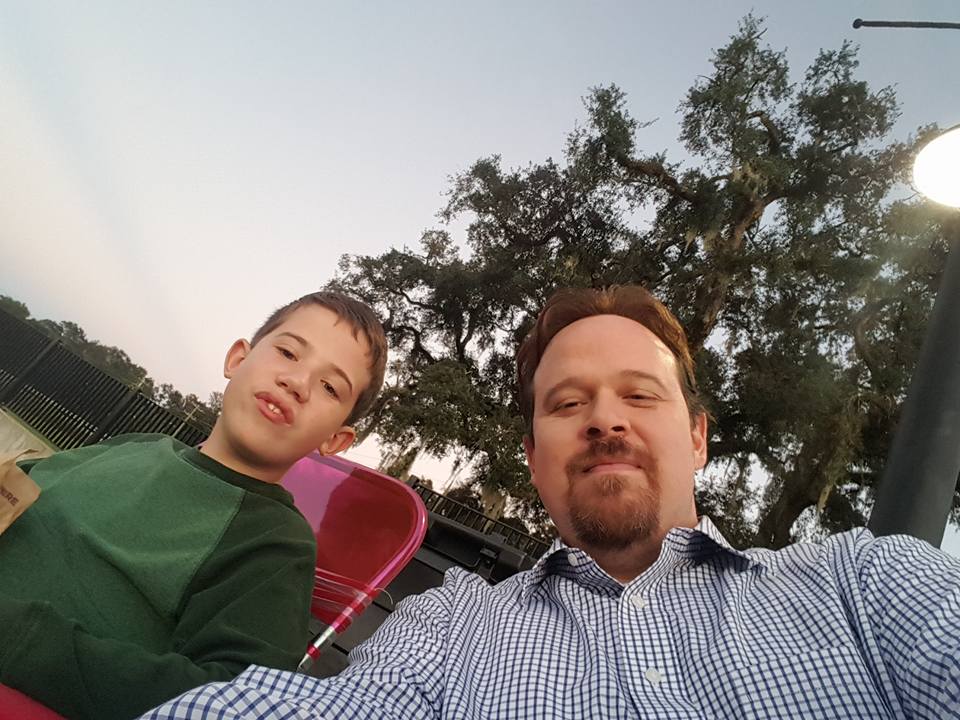
You’re not alone in this. As a parent who’s navigated these waters for over 18 years with my autistic son, I know the fear that keeps you up at night — the worry that one wrong move could cost your child their benefits, their care, their future. Take a breath. You’ve found the right place, and Nevada has some genuinely powerful advantages for families who plan carefully — starting with the fact that your state is one of the best trust jurisdictions in the entire country.
Caregiving rarely keeps business hours, which is why some parents decide to work for themselves. If that’s on your radar, this page on Nevada cleaning business licenses and costs is a practical starting point.
Here’s everything you need to know about special needs trusts in Nevada — no legal jargon, just clear answers from a parent who’s been there.
Two Types of Special Needs Trusts
Before diving into the details, you need to understand the two main types of special needs trusts — because the rules are different for each:
Third-Party Trust
- Funded by: Family members (parents, grandparents, anyone except the beneficiary)
- Medicaid payback: None — remaining funds go to whoever you name
- Age limit: None
- Best for: Estate planning, setting aside money for your child’s future
First-Party Trust
- Funded by: The beneficiary’s own assets (inheritance, settlement, back pay)
- Medicaid payback: Yes — Medicaid is reimbursed first after death
- Age limit: Must be under 65 at creation
- Best for: Protecting an inheritance or settlement your loved one received directly
Nevada hasn’t adopted the Uniform Trust Code that most states use — instead, the state has developed its own trust framework under NRS Chapters 163 and 164, designed to be one of the most flexible and protective in the nation. That’s actually good news for families planning a special needs trust. Not sure which type you need? In most cases, if you’re putting money aside for your child, that’s a third-party trust. If your child already has the money (from an inheritance, lawsuit, or other source), that’s a first-party trust.
What Nevada Families Need to Know (2026)
Every state handles special needs trusts a little differently. Here’s what matters most for Nevada families — whether you already have a trust or you’re just starting to look into one.
- 1. Nevada has no state income tax on trusts — and that’s a huge advantage.
Unlike most states, Nevada charges zero state income tax on trust earnings. No income tax on interest, dividends, capital gains — nothing. While federal trust taxes still apply (and they’re steep — 37% on income over ~$16,000), the absence of state-level taxation means more money stays in the trust for your child. This is one of the key reasons Nevada is considered one of the best trust jurisdictions in the country. - 2. Nevada is a community property state — and that affects how you fund the trust.
Nevada is 1 of 9 community property states. What this means for trust planning: all property acquired during marriage is owned 50/50 by both spouses. Neither spouse can gift community property to a trust without the other’s consent (NRS 123.230). The upside? When the first spouse dies, both halves of community property get a full stepped-up basis — a significant tax advantage that can save your family thousands. Your attorney needs to carefully trace which assets are community vs. separate property when funding the trust. - 3. Nevada is an SSI Criteria State — same rules, but you still need to apply for Medicaid separately.
Nevada uses the same income and resource criteria as SSI to determine Medicaid eligibility for disabled individuals. But unlike some states where SSI recipients are automatically enrolled in Medicaid, Nevada requires a separate Medicaid application. The good news is the criteria are identical — if your child qualifies for SSI, they should qualify for Medicaid too. Just don’t assume it happens automatically. File both applications. - 4. Nevada Medicaid has strict reporting rules for trust spending. (For first-party SNTs)
This one catches trustees off guard. In Nevada, any trust expenditure over $5,000 must be reported to your Medicaid caseworker immediately. On top of that, the trustee must provide a full annual accounting of all trust spending to DWSS (the Division of Welfare and Supportive Services). The trustee can buy things for the beneficiary but can never hand them cash. Get this wrong and you risk losing benefits. - 5. “Empty” trusts don’t count in Nevada — you must actually fund it.
Nevada Medicaid doesn’t recognize “dry” or “empty” trusts. A trust document sitting in a drawer with no assets transferred into it is not a valid trust for benefits purposes. If you set up a trust, fund it. If you’re waiting for a settlement to arrive, the timing of funding matters. Talk to your attorney about the sequence. - 6. Nevada’s trust laws let you modify an irrevocable trust without going to court.
Nevada’s decanting statute (NRS 163.556) gives trustees significant flexibility to move assets from one trust into a new one with better terms. Unlike many states, Nevada doesn’t require court approval or even notice to beneficiaries for decanting. If laws change or your child’s needs evolve, the trust can adapt. - 7. Nevada allows dynasty trusts that last up to 365 years.
Most states limit how long a trust can exist. Nevada’s modified Rule Against Perpetuities (NRS 111.1031) allows trusts to last 365 years. For families with hereditary or genetic disabilities, this means a single well-drafted third-party trust can potentially protect multiple generations. Combined with the GST tax exemption and no state income tax, this is a powerful multigenerational planning tool. - 8. The trust can pay for groceries without reducing your child’s SSI.
This changed on September 30, 2024. Before that, buying food with trust money cut the SSI check. It doesn’t anymore. This is a big deal for day-to-day quality of life. - 9. The trust paying for housing DOES still reduce SSI.
Rent, mortgage, utilities — if the trust pays those, the SSI check goes down (up to about $351/month in 2026). That’s the tradeoff, and it’s worth understanding before your trustee starts writing checks. - 10. Nevada has no state estate tax — but the federal exemption just changed.
Nevada charges no estate tax, inheritance tax, or gift tax at the state level. The federal estate tax exemption was made permanent at $15 million per individual ($30 million per married couple) by the One Big Beautiful Bill Act signed in July 2025. For most families, this means estate taxes aren’t a concern — but your trust planning should still account for potential future changes. - 11. The person managing the trust (the “trustee”) has to account for every dollar — no matter what type of trust you set up.
Whether you created a third-party trust (funded with your money) or your child has a first-party trust (funded with theirs), Nevada law (NRS § 165.1207) gives your family the right to request a full accounting of how trust money is being spent. This isn’t optional — it’s the law. If a bank, attorney, or family member is serving as trustee and won’t show you where the money is going, that’s a red flag.
Official sources: Nevada DHCFP (Medicaid) · SSA Guide to Special Needs Trusts · NRS Chapter 163 (Trust Law) · NRS Chapter 166 (Spendthrift Trusts)
What Does a Special Needs Trust Cost in Nevada?
This is one of the first questions every family asks, and the honest answer is: it depends on your situation. Here are the typical ranges Nevada families should expect:
| Trust Type | Typical Attorney Fees | When You’d Use It |
|---|---|---|
| Third-party SNT (most common) | $2,000 – $5,000 | Parents/grandparents setting aside money for a loved one |
| First-party SNT | $3,500 – $8,000+ | Protecting an inheritance, settlement, or assets the person already owns |
| Pooled trust | $0 – $8,000 enrollment | Smaller amounts or no family member to serve as trustee (see below) |
| Medicaid Waiver Waitlists by State | How long the wait is in every state, which states have no waitlist, and what to do while you wait | |
| What Does My Family Need? — Free Assessment | Answer 10 questions and get a personalized special needs planning action plan for your state |
Beyond attorney fees, budget for ongoing costs: professional trustee fees if you’re using a corporate trustee (typically 0.5–2% of trust assets annually), annual tax preparation ($500–$1,500 for the federal fiduciary return), and Nevada’s advantage — no state fiduciary income tax return needed. Las Vegas metro attorneys tend to charge at the higher end; Reno and rural areas may be lower.
If cost is a barrier, Nevada has access to several national pooled trust programs with varying entry costs — see the programs below.
Nevada Pooled Trust Programs
If setting up an individual trust isn’t in the budget right now, a pooled trust can be a practical alternative. Your sub-account is managed alongside others by a nonprofit, which means lower costs and professional oversight. Nevada doesn’t have a state-specific pooled trust, but several national programs serve Nevada residents:
| Program | Minimum Deposit | Fees | Notes |
|---|---|---|---|
| Commonwealth Community Trust | $8,000 | 0.84% annually (admin + investment) | National program serving all 50 states; first-party and third-party sub-accounts; joinder agreement required. Call (804) 740-6030 |
| National PLAN Alliance | Varies by affiliate | Varies by affiliate | National network connecting families to local PLAN affiliates (not a trust itself); contact for your nearest serving affiliate. Visit nationalplanalliance.org |
| CPT Institute | Varies | $50–$150/month + 0.60% investment fee | National pooled trust program; first-party and third-party sub-accounts; serves Nevada residents. Call (855) 274-4700 |
Before enrolling, ask how remainder funds are handled after the beneficiary’s death — some pooled trusts retain a portion. For first-party pooled trusts, Medicaid payback applies. For a deeper look at how pooled trusts work and when they make sense, see our complete pooled trusts guide.
Mistakes Nevada Families Make
From my 15+ years helping families (including my own):
- Setting up the trust but never funding it. Nevada Medicaid doesn’t recognize “dry” trusts. A trust document sitting in a drawer with no assets transferred into it protects nothing. This is the most common mistake I see, and in Nevada it’s explicitly not valid. Nevada Medicaid does not recognize unfunded trusts — assets must be transferred in (bank accounts, life insurance beneficiary designations, your will) for the trust to provide any protection.
- Leaving money directly to your disabled child. A well-meaning grandparent leaves $50,000 in a will to your child — and destroys their SSI and Medicaid. Nevada’s $2,000 asset limit means even a small direct inheritance can wipe out benefits. Every dollar meant for your child needs to go through the trust, not to them.
- Not understanding community property rules when funding the trust. Nevada is a community property state. You can’t transfer marital assets into a trust without your spouse’s consent. If you fund a third-party SNT with community property and your spouse later contests it (in divorce or otherwise), the trust could be partially unwound. Your attorney needs to carefully identify which assets are community vs. separate property before anything moves.
- Handing cash to your child from the trust. In Nevada, the trustee can buy things for the beneficiary but can never give them cash directly. This seems like a technicality, but Nevada Medicaid specifically flags it. Cash distributions can be counted as income, potentially disqualifying your child from SSI. The trustee must always pay vendors directly.
- Forgetting the $5,000 reporting rule. Nevada Medicaid requires that any trust expenditure over $5,000 be reported to the caseworker immediately, plus a full annual accounting of all spending. Miss this and you risk a Medicaid review that could jeopardize benefits. Make sure your trustee knows this going in.
- Not buying a burial policy while your child is alive. Nevada Medicaid guidance is specific: the trustee cannot pay for burial expenses after the beneficiary dies. A pre-need burial policy must be purchased during the beneficiary’s lifetime from trust funds. If you don’t do this, the family is stuck with those costs after Medicaid takes its payback.
- Waiting until after you die to set up the trust. If you’re reading this page, do it now. Not next year. Your estate plan, your will, your life insurance beneficiary designations — all of it needs to point to the trust before something happens to you.
The best way to avoid these mistakes? Work with an attorney who knows Nevada special needs law. Find Nevada attorneys →
Nevada’s ABLE Savings Program
A special needs trust is one piece of the picture. Nevada’s ABLE program is called ABLE Nevada, part of the National ABLE Alliance and managed by Ascensus. ABLE accounts let your loved one save up to $100,000 without jeopardizing SSI — and they’re much simpler to open than a trust. Since Nevada has no state income tax, the tax deduction question is moot — but earnings grow tax-free and withdrawals for qualified disability expenses are tax-free at the federal level.
Important: Federal law does make the state a potential creditor of an ABLE account when the account owner dies (26 U.S.C. §529A(f)), and Nevada has not passed a law waiving this payback. But under CMS guidance (SMD 17-002), a state is only required to pursue ABLE funds when they pass into an estate already subject to Medicaid estate recovery — generally recipients of long-term-care-related services at age 55 or older, with recovery barred while a surviving spouse or a child who is under 21, blind, or disabled is living. Outside those situations, filing a claim is the state’s option, not an obligation. ABLE is still valuable in Nevada — factor potential payback into planning for older beneficiaries, and pair ABLE with a third-party trust (no payback exposure) for larger amounts.
Many families use ABLE for day-to-day expenses (therapy, equipment, activities) and an SNT for larger amounts (inheritance, settlements). Starting January 1, 2026, the ABLE Age Adjustment Act expanded eligibility to individuals whose disability began before age 46 (up from 26) — opening access to an estimated 6 million more people nationwide. Use our calculator to see which combination fits your situation:
🧮 Do You Need a Special Needs Trust, ABLE Account, or Both?
Answer a few quick questions for a recommendation based on your situation.
For the full breakdown — eligibility, contribution limits, qualified expenses, and how ABLE works alongside a trust — see our complete ABLE accounts guide.
Beyond the Trust: Other Nevada Planning Steps
Guardianship: When your child turns 18, you may need legal authority to help with decisions. Nevada uses “guardian” for both personal and financial matters (NRS Chapter 159). The state also recognizes supported decision-making as a less restrictive alternative. Compare your options →
Disability Services: Nevada’s HCBS waivers for I/DD and physical disabilities are managed through three Regional Centers. Contact the Desert Regional Center in Las Vegas (702-486-7850) or the Sierra Regional Center in Reno (775-688-1930). Wait times can be 2+ years — apply early. Learn about waivers →
Meeting with an attorney soon?
Send them this page ahead of time. It shows you've done your homework on Nevada's specific rules — and it helps your attorney prepare for a more productive first meeting.
Find a Special Needs Trust Attorney in Nevada
You’ve done your homework. You understand your options. Here’s the honest truth: setting up a special needs trust is not a DIY project. One wrong clause can disqualify your child from the benefits they depend on. You need an attorney who specializes in this — not a general estate planner, not the lawyer who did your will. And in Nevada, where trust law is more sophisticated than most states and community property rules add complexity, that expertise matters even more.
Get Connected with a Nevada Special Needs Attorney
We can help you find a qualified special needs planning attorney in your area who understands Nevada’s rules and will protect your family’s benefits.
Use the directories below to find a qualified special needs trust attorney in your area, or email us and we’ll point you in the right direction.
Research on your own:
- Special Needs Alliance — Nevada — national directory of special needs attorneys; Nevada has 1 active SNA member (Henderson/Las Vegas)
- NAELA (National Academy of Elder Law Attorneys) — national directory of elder law and special needs attorneys
- Academy of Special Needs Planners — searchable directory of special needs planning attorneys
- State Bar of Nevada — lawyer referral service for estate planning and elder law
- Nevada Disability Advocacy & Law Center (NDALC) — free legal assistance for people with disabilities (federally mandated P&A organization); Las Vegas: 702-257-8150, Reno: 775-333-7878
- Nevada Legal Services — free legal help for low-income families; Las Vegas: 702-386-0404, Reno: 775-284-3491
Not sure what to ask or what to expect? Our complete guide to finding an SNT attorney walks through the questions you should ask, the red flags to watch for, and how the process typically works.
Recent Nevada Updates
Last reviewed: March 2026
- January 2026: ABLE Age Adjustment Act takes effect — disability onset age expanded from 26 to 46, making millions more people eligible for ABLE accounts including ABLE Nevada.
- September 30, 2024: SSA eliminates food from in-kind support and maintenance calculations — trusts can now pay for groceries without reducing SSI.
- July 2025: One Big Beautiful Bill Act makes the $15 million federal estate tax exemption permanent ($30 million per couple) — eliminates the previously expected 2026 sunset to ~$7 million.
- 2024–2025: Nevada continues to strengthen its trust laws. Its decanting statute (NRS 163.556) applies to any trust governed by, sited in, or administered under Nevada law.
- Ongoing: Nevada’s HCBS waivers for individuals with I/DD continue to have waitlists of 2+ years. The Structured Family Caregiving waiver (effective 2025) provides an option for families whose loved one can be supported at home by a paid caregiver. Contact the Aging and Disability Services Division (ADSD) at 775-687-4210 to start the eligibility process early.
- Federal watch: Proposed federal budget changes could affect Nevada Medicaid funding. Work requirements and eligibility changes may be implemented by late 2026 — monitor the Nevada DHCFP website for updates.
Laws and programs change. If you spot something outdated on this page, let us know at randy@specialneedstrustbystate.com — we review every correction and update promptly.
Last updated: March 2026. I review Nevada’s rules quarterly and update this page whenever regulations change. Bookmark it.
Go Deeper: Comprehensive Special Needs Planning Guides
Your state rules matter — but the planning doesn’t stop there. These guides cover everything you need to protect your family:
| Special Needs Trusts: The Complete Guide | Types of trusts, setup process, costs, trustee selection, and the mistakes that cost families everything |
| ABLE Accounts Explained | Eligibility (2026 age expansion), contribution limits, qualified expenses, and state program comparison |
| Government Benefits: SSI, SSDI & Medicaid | How benefits work, coordination with trusts, work incentives, and the age 18 transition |
| Funding Strategies | Life insurance, gifts, settlements, retirement accounts — how to actually fund your plan |
| Letter of Intent | The document that tells future caregivers who your child really is — section-by-section guide |
| Foundational Documents: Will, POA & Healthcare Directive | The four documents that send assets to the trust instead of to your child — what each does and what they cost |
| Life Planning: Guardianship, Housing & Transition | Guardianship options, housing choices, the age 18 cliff, and employment |
| Parent Journeys | Real questions and experiences from families navigating life with a special needs child |
| Find a Special Needs Trust Attorney | Trusted directories, questions to ask, red flags, and what to expect from the process |
| Special Needs Trusts for Mental Illness | Schizophrenia, bipolar disorder, schizoaffective, severe PTSD/OCD — what’s different about planning for severe mental illness |